Sun-Trap Rooms and the G-Value Blind Spot: What ‘Energy-Efficient’ Glass Won’t Tell You
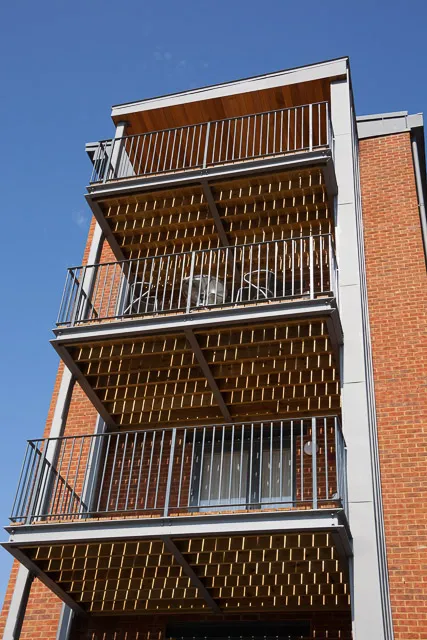
Photo: Peter Facey , CC BY-SA 2.0, via Wikimedia Commons
There’s a particular kind of disappointment that arrives around 4pm on a warm July afternoon. You’ve spent five figures on new windows. The certificate on the glass says A-rated. The salesperson said ‘energy-efficient’. And the living room is now a greenhouse with a sofa in it.
That’s not a faulty unit. It’s a spec mismatch, and it happens because most window quotes are written around a single number: the U-value. That figure measures heat escaping. It says nothing at all about heat arriving.
U-value is a winter number
U-value (W/m²K) tells you how quickly heat leaks out through the whole window — frame, glass, spacer, the lot. Lower is better. A decent modern double-glazed window lands somewhere around 1.2 to 1.4; a good triple can dip under 1.0.
It’s a useful figure, and you should always ask for the whole-window number rather than the glass-only one, because frames and spacers are where plenty of quotes get quietly creative.
But U-value is a cold-weather measurement. It assumes a chilly outside, a warm inside and no sun. Point a big window due south and it stops being the whole picture.
What g-value actually measures
G-value — sometimes called solar factor — is the share of the sun’s energy that passes through the glass and ends up in your room as heat. It’s written as a number between 0 and 1, or as a percentage.
- Standard double glazing: roughly 0.6–0.7
- Solar control glass: can drop to 0.35 or below
- Triple glazing: often lower than double, simply because there are more panes and cavities in the way
Here’s the twist that catches people out: with g-value, a high number is not a virtue. On a north-facing window in Newcastle, a bit of free solar gain is lovely in March. On a south-facing box bay in a 1930s semi with a dark floor, a low g-value is the thing that stops you buying a fan.
The trade-off nobody puts on the quote
Solar control isn’t free. Cut the g-value and you usually cut light transmittance (LT) with it. A standard clear unit lets through around 70% of visible light; a body-tinted or heavily coated solar control unit might sit at 55–60%. In a small room with a deep reveal, that gap is very noticeable in February.
There’s a winter-gain argument too. Glass that blocks July sun also blocks April sun, so you may lose some free warmth at the edges of the year. In a well-insulated modern house that’s usually a fair trade. In a draughty Victorian terrace it’s more of a judgement call.
So don’t accept ‘solar control’ as a magic phrase. Ask what you’re giving up in exchange.
Coatings, tints and where the glass does its work
Most glass sold in the UK carries a low-emissivity coating: a microscopically thin metallic layer designed to bounce heat back into the room. Soft coats perform better but are fragile, so they have to sit on surface 2 or 3 — counting from the outside. Hard coats are tougher and can be left exposed, but perform slightly less well.
Solar control coatings work differently. They reflect or absorb near-infrared energy before it becomes heat indoors. Some units combine both jobs in one coating; others use a tinted body or a laminated interlayer. Every combination behaves differently, and the numbers vary between manufacturers.
Practical questions worth putting in writing:
- Which surface is the coating on, and is it hard or soft?
- What are the whole-window U-value, g-value and light transmittance?
- Is the glass tested to BS EN 673 (U-value) and BS EN 410 (g-value and light)?
- Does the guarantee cover the coating specifically, and for how long?
If the answer to the second question is ‘it’s A-rated’, you don’t have a specification yet. You have a badge. The same logic applies to the top rating bands generally — a headline letter isn’t a substitute for three honest numbers.
Shading and ventilation: the cheap half of the fix
No glass on earth outperforms a bit of shade. External shading — shutters, awnings, a brise-soleil, a pergola, even a well-sited tree — stops the energy before it ever reaches the pane. Internal blinds are much weaker, because by the time sunlight hits them, the heat is already inside the room.
Deep reveals and overhangs help more than people expect, particularly on a south elevation, where a modest overhang can cut high-summer sun while still letting low winter sun rake in.
Then there’s air movement. Trickle vents are a background ventilation device; they are not a cooling strategy. What actually shifts heat is openable sashes, a tilt-and-turn on night vent, and cross-flow between two elevations. If you’re specifying windows you can’t open wide, plan for that now rather than in August.
Worth knowing: Part O of the Building Regulations, covering overheating in new homes, has been in force since 2022. It doesn’t apply to replacement windows in existing houses — but it exists because the industry finally accepted that overheating is a design problem, not a freak weather event. The same thinking applies to your living room.
Straight talk
A south-facing room needs a conversation, not a brochure. A good installer will ask which way the window faces and what’s opposite it before recommending a unit, and will hand over a datasheet with three numbers on it rather than one.
If they can’t — or won’t — that tells you something genuinely useful, and you’ve found it out before paying a deposit rather than after.